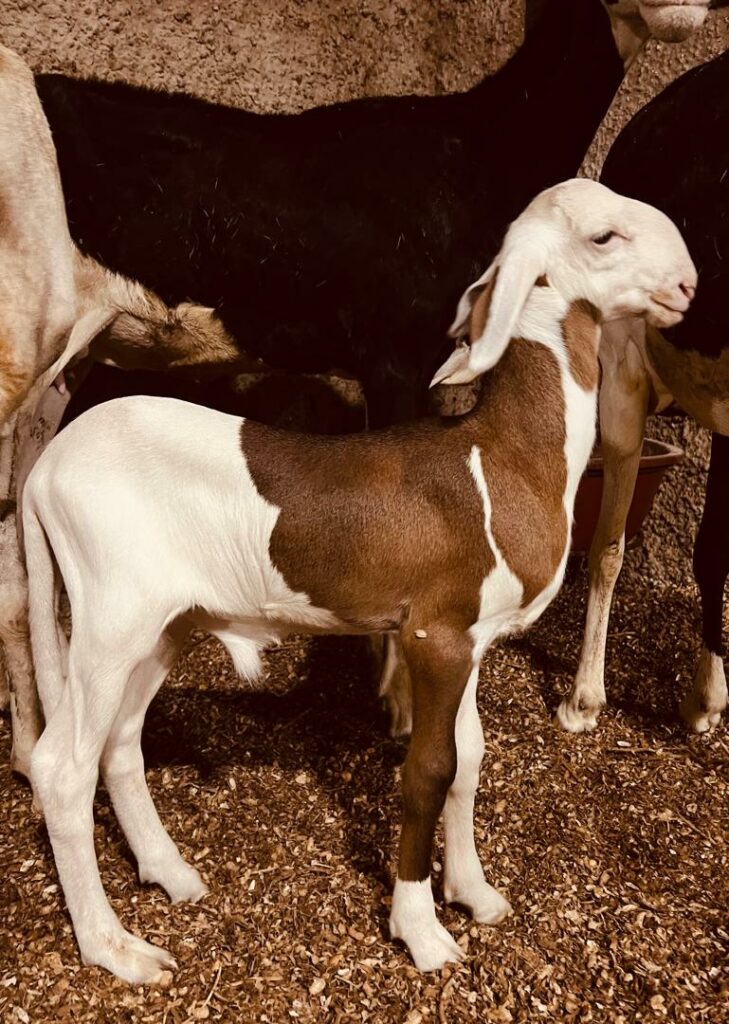
Origin and history of the Ladoum
The history of the Ladoum can be read over millennia or over fifty years, depending on whether you follow the short-haired Moorish sheep or modern Senegalese selection. Here are both threads, with their sources. Synthesis based notably on the documentary work of the OS Ladoum portal.
Origins: the Neolithic
In the rock shelters of Tassili n'Ajjer (Algeria), the Iheren paintings depict "Ovis longipes" sheep — short-haired, long-legged, convex-profiled — strikingly close to today's Ladoum. The varied coats seen there show that colour was never a breed trait. Milking and herding scenes reveal an already organised pastoral life.
The Ladem people
The name "Ladoum" comes from the Ladem (or Ladoum) Berber tribe, one of the oldest of the southern Sahara, scattered from the Atlantic to Gao. Nomadic herders rich in camels and sheep, the Ladem selected their animals for height at the withers, neck length and milk qualities, and refused crosses with Merino or Karakul, deemed "too small". In colonial times a Ladoum ram sold for 70 francs — seven times a Touabire, more than an ox.
Scientific discovery
French zootechnical missions described the short-haired Moorish sheep from 1818 (Huzard), then Danthon (1820) and Olivier (1827). In 1912 Jacques Meniaud registered the Ladoum as a breed in its own right in "Haut-Sénégal-Niger": a "true giant of the species". A photograph of a 150 kg ram appeared in the Dépêche Coloniale Illustrée of 15 December 1910 — the oldest known photographed Ladoum. In 1922 explorer Paul Adam described in Bogué (Mauritania) "ladoum sheep with short hair, as tall as donkeys".
The Thiès pioneers
Modern history begins in Thiès with Saada Sy, back from Mauritania with the first purebred Ladoums. He trained "students", including Matar Mbengue, who himself travelled to buy Ladoums from the Ladem tribes. Pioneers also sourced from the Touba Toul and Mbirkilane markets and via the Dakar-Bamako railway. In 1978 Thiès hosted the first fair dedicated to the Ladoum. The torch then passed to Dakar breeders — Mansour Mbodj, Kiffa Gueye, Abou Kane and others — who structured the industry: ADAM founded in 1998 (Kiffa Gueye first president), official shows, TV programmes.
The era of shows and records
In 2004 the first fair was held at the Dakar Obelisk. In 2010 the Kharbii TV show crowned Mandela, the first ram measured at 110 cm at the withers. In 2011 Cheikh Diop became SALADAM champion with a 112.7 cm record — the same year ADAM introduced its scoring coefficients. The Ladoum became a national media phenomenon, and prices soared.
A living heritage
The Ladoum is now a symbol of prestige across West Africa, celebrated by the international press — National Geographic described it as one of the world's most expensive sheep. Top animals trade for tens of millions of FCFA. Today's challenge: preserving lineage purity and documenting genealogies — precisely the mission of pedigree databases like ours.
— The herd in pictures
Facebook →Explore the pedigree database →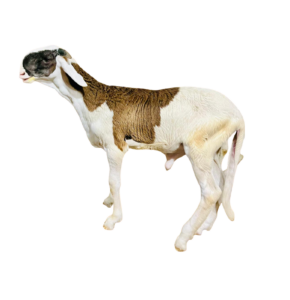
Alberto fils de noblesse
Commandante
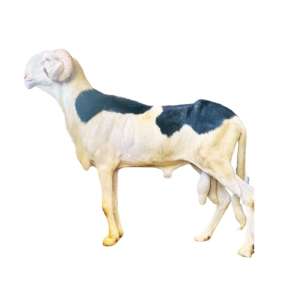
Alou Boy fils de Magal de Kheude
115 cm · Magistrat
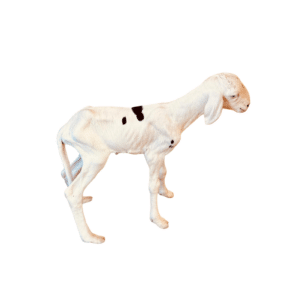
Athena fille de Noblesse
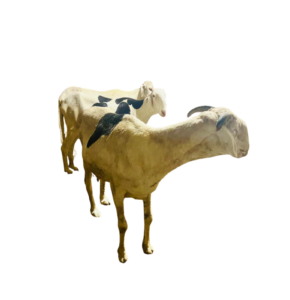
Bec fille de Gold
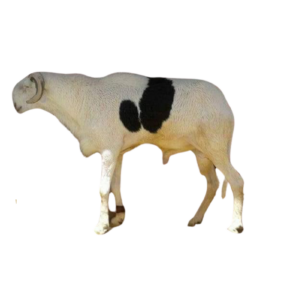
Commandante Fils de Macktoum
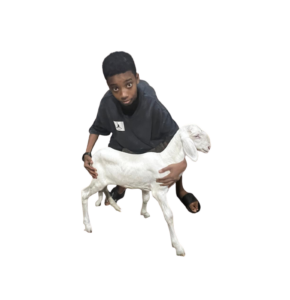
Dina fille de Noblesse
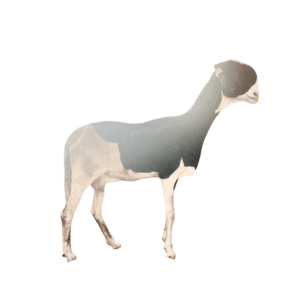
drakkar junior fille de Alou boy
Alou Boy
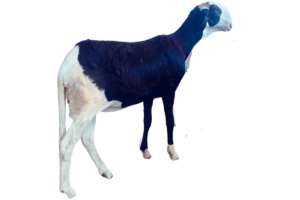
Drakkar Noir fille de Petit Thiouloul
104 cm · Abdou Fall
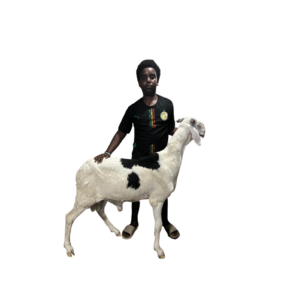
El capitan fils de capitole
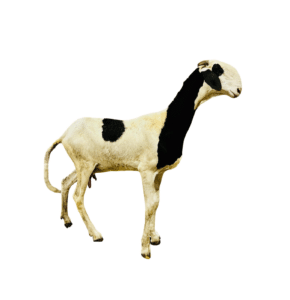
Elyane fille de Noblesse
Alou Boy
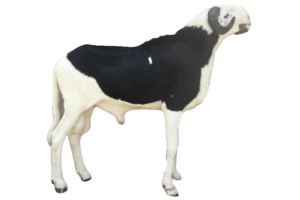
Espoir fils de Saloum
Saloum Saloum
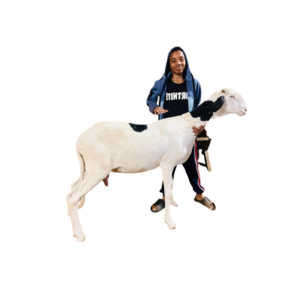
Flora fille de Milky
Magistrat
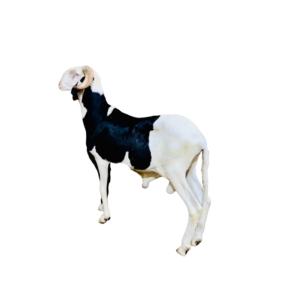
Franklin fils de Napoleon 2
115 cm · Napoléon
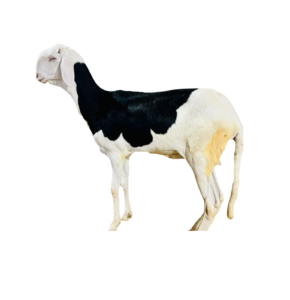
Frankline fille de franklin
Magistrat
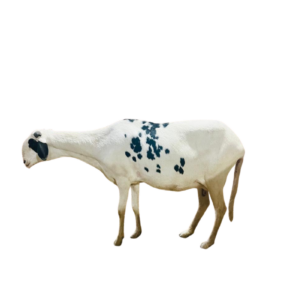
Gaia fille de Hermes
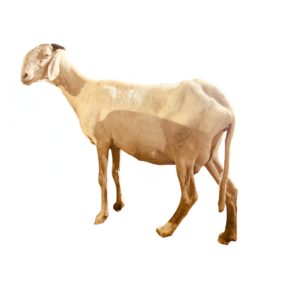
Gina fille de Nguiro
105 cm · Commandante